
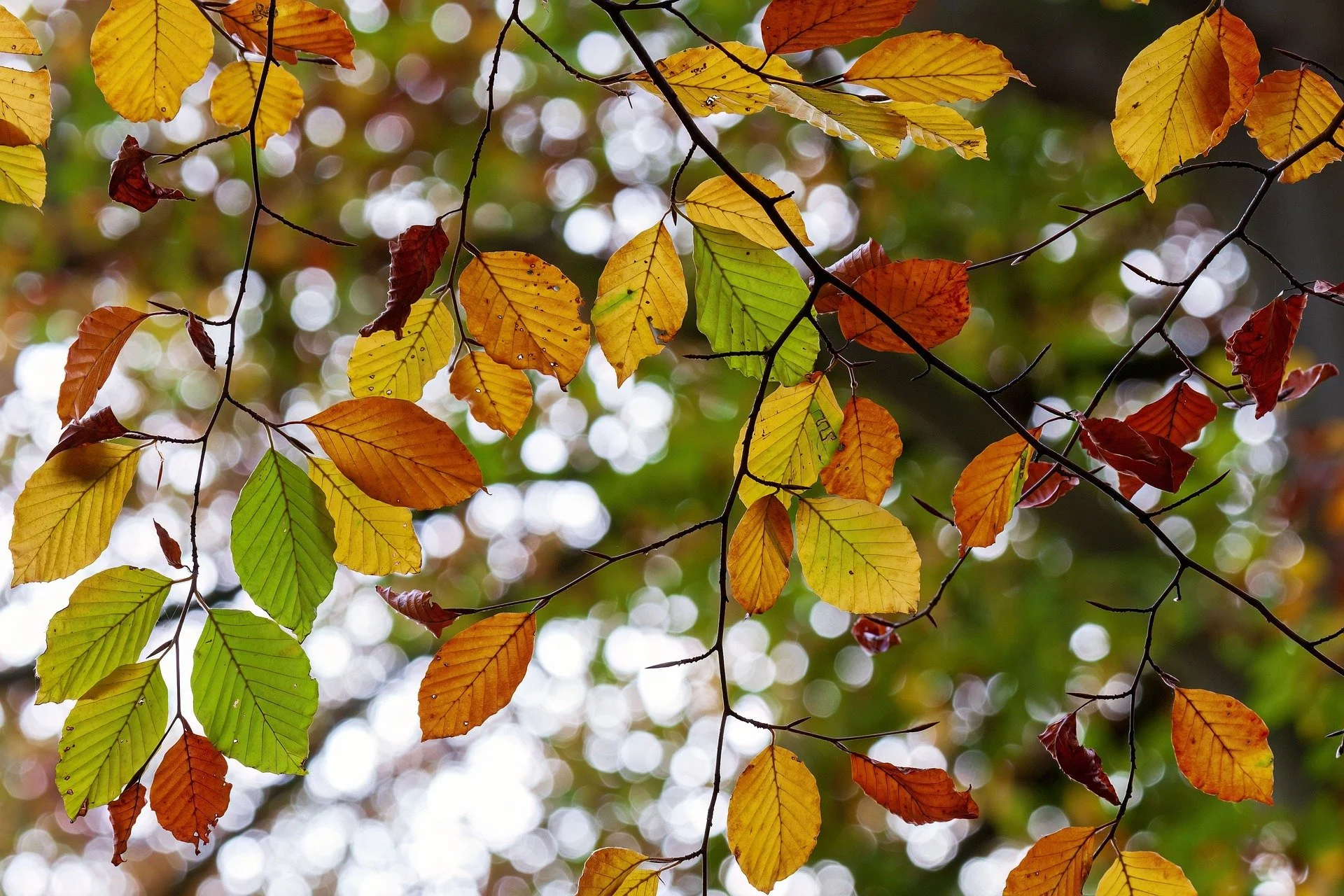
There’s been a lot of discussion about what constitutes the best way to clean up your garden each fall and spring. Many people equate getting their garden ready with making it “tidy”: removing fallen leaves, cutting down dead perennial plant stems, deadheading spent flowers, and clearing away small fallen branches and twigs. Fallen leaves are often the first thing someone thinks of when starting their clean-up. They create a sudden covering over the garden, and the instinct may be to rake them up and remove them right away.
But gardens do not naturally exist in a state of cleanliness and sterility. In fact, plants benefit from, and even rely on, a certain amount of what could be considered messy or untidy surroundings. All of these organic materials belong in your garden. They are incredibly vital not only to its long-term success, but to the greater ecology of your surrounding area.
Fallen leaves, spent flower stems, broken plant stalks, and spent seed heads all serve as refuge, habitat, and overwintering sites for a large number of beneficial insects that live in your garden. This ranges from ground-dwelling beetles, which work diligently close to home, to native bees that travel far, to graceful butterflies doing good work throughout your neighbourhood.
Here are three examples of very different kinds of beneficial insects native to Toronto that you can support simply by leaving more organic material in your garden.
Eastern Comma Butterfly
This native butterfly overwinters as an adult in dry, curled-up leaves. Its brown wings even resemble fallen dried leaves, making it especially well-camouflaged from predators through the winter months. It is an important early-season pollinator, emerging in the spring to look for nectar around your garden and neighbourhood.
The Eastern Comma is a valuable addition to your garden because it belongs to a rare group of early spring pollinators, supporting the pollination of Serviceberries, Maples, Willows, and early spring bulbs at a time when many other pollinators are still hibernating. Without dried fallen leaves, they have fewer places to overwinter safely, which could lead to reduced numbers of this very beneficial pollinator. You can provide a safe resting site by keeping a layer of dry, undisturbed fallen leaves left in place through winter.
Pennsylvania Ground Beetle
This native beetle is a resident predator, an organism that will remain in a particular area as long as all its needs are being met (habitat, hydration, and food) and will keep working and reproducing there, ensuring future generations. Think of this beetle as your on-location, always-on-duty pest control.
Unlike bees, butterflies, and other flying insects, this ground beetle will happily spend its entire life working and living right in your garden, provided it has sufficient moisture and leaf cover. It emerges at night to feed on slugs, caterpillars, root-feeding larvae, and weed seeds, which is great for controlling invasive plants. They overwinter in leaf litter and in the upper soil layers, which means that removing leaves, or even the act of raking, is enough to disturb these hyper-local heroes. You can make your garden more hospitable to them by leaving leaf litter undisturbed on the soil surface.
Leaf-cutter Bees
If you’ve ever noticed semi-circular holes cut out of your leaves, this may be a sign that Leaf-cutter Bees are visiting. These are solitary, non-aggressive bees that nest in natural tree cavities, and they use small pieces of fallen leaves and flower petals to build out the nursery chambers where their next generation will grow.
They’re cavity nesters, so they’ll use whatever holes in wood they can find. But in the average garden, leaving perennial stems standing, such as Echinacea, is preferable, as it allows for a greater availability of potential overwintering sites. By leaving spent plant stems in place, you’re giving this essential local pollinator a home base to overwinter, build the next generation, and ensure the pollination of many flowering plants, including ecologically important native species. To support these beneficial pollinators, leave fallen leaves and hollow plant stems standing for nesting material.
Developing a Clean-Up Plan That Works for You
For all these species and more to benefit, the ideal time to leave your leaves is until late May. When nighttime temperatures stay consistently above 10 degrees Celsius is when the majority of overwintering insects have emerged. Leaving your leaves until around the May long weekend (around the 24th) gives our overwintering insect friends the greatest chance possible to complete their hibernation and emergence cycle.
However, many garden owners feel it’s not possible to leave their leaves until May because of the unkempt aesthetic it gives their garden. In this case, I usually offer a compromise: leave the leaves untouched for the month of April, and then, rather than removing them completely, gently relocating them to an area of the garden that is less visible. That way, your garden can have a cleaner appearance while the overwintering insects have a chance to complete their hibernation. Moving the leaves gently is key; aggressive raking or mulching would be detrimental.
Ideally, I suggest relocating them somewhere that offers protection from the wind so they remain localized in your garden. Suitable spots include the edge of your garden where it meets a structure such as your house, minimizing further disturbance or foot traffic. You could also tuck leaves under any low-lying shrub with a dense canopy (such as Boxwood, Privet, Spirea, Weigela, or Elderberry) or under a conifer, to help buffer them from the wind. The goal is to preserve the moisture and shelter levels of their original site.
For some gardeners, letting leaves and flowers stand through to spring will be a big adjustment to how they approach fall and spring clean-up. But more and more gardeners are being drawn to this approach due to the ecological benefits it offers their green space. A highly manicured garden is difficult to maintain and can be disrupted by a single fallen leaf. We can give ourselves and our pollinator friends a break by leaving a little wildness in our garden.