
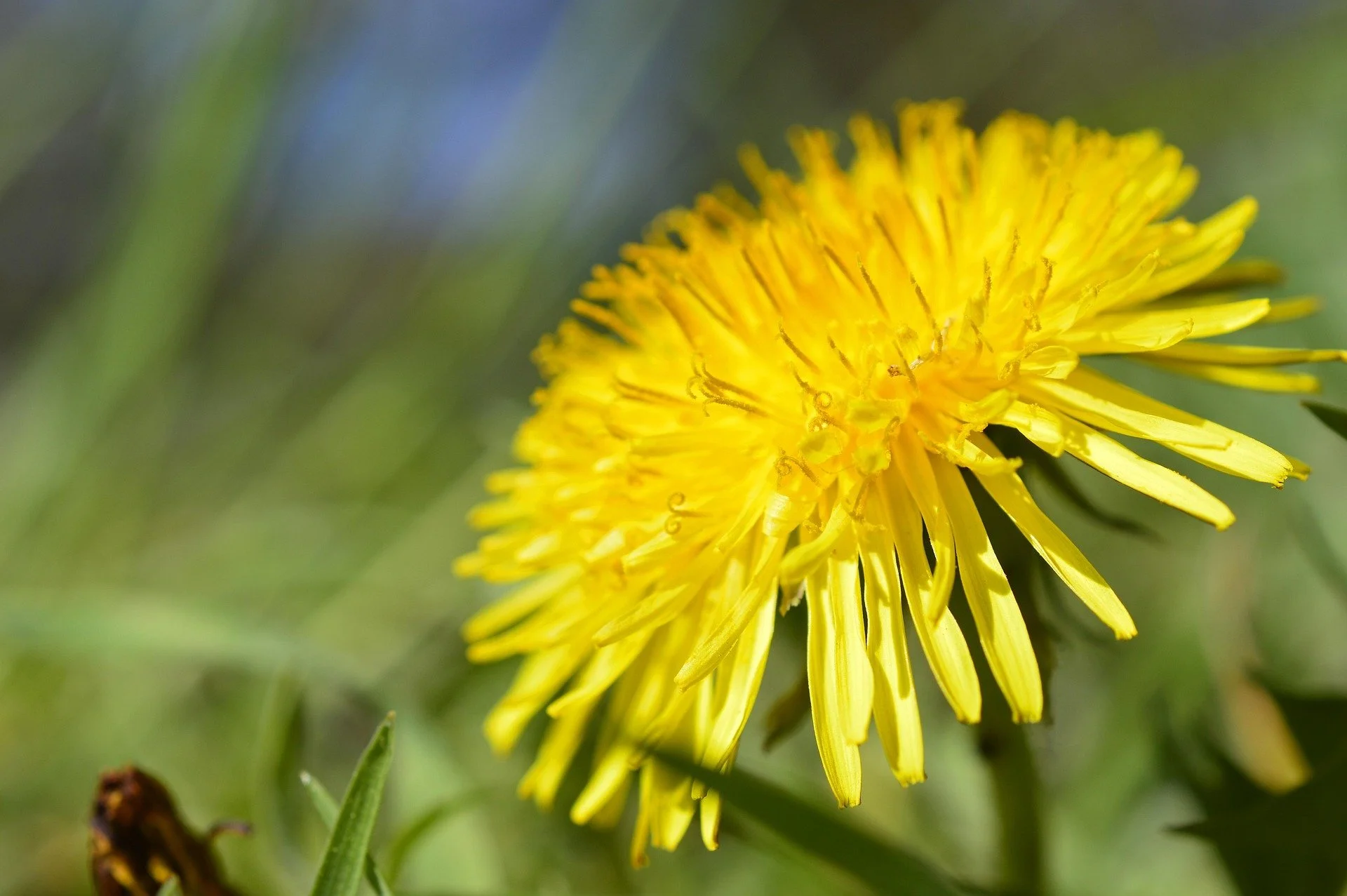
How do you feel when you spot the first dandelion of the season pushing up through your lawn? Is it a cheerful sign of spring? Or does it feel like a botanical invasion?
For most garden and lawn owners, it’s the latter: a single dandelion is a sign of an army to come, and they brace themselves for a territorial battle that will last all season.
But ecological gardening offers a new perspective that gives us a more effective — and less adversarial — way of managing these unwelcome visitors. Dandelions aren’t out to ruin your garden; they’re responding to it.
Dandelions were designed by nature to be remediators of poor growing conditions. They root deeply to break up compacted soil, flower early to feed the first pollinators of the season, and seed prolifically to colonize any bare ground they can find. If dandelions have appeared in your lawn or garden, it’s because the conditions invited them to be there. They’re not just weeds; they’re wildflowers with an ecological purpose.
Effective dandelion management, then, isn’t so much about “winning a battle” as it is understanding why they’re appearing, what they’re telling you about your garden, and how to respond accordingly.
Understanding the dandelion
Dandelions are what ecologists call a ruderal species — plants that specialize in disturbed or stressed environments. Their purpose is to rehabilitate dead or damaged soil, acting as the first wave of ecological recovery and paving the way for other species to thrive.
Their taproots, which can extend 6-18 inches deep, are actually quite useful. They break through compacted layers of soil, drawing up minerals from deep below and depositing them at the soil surface as their leaves decompose. In a struggling lawn, dandelions often signal compacted soil and are doing genuine remediation work.
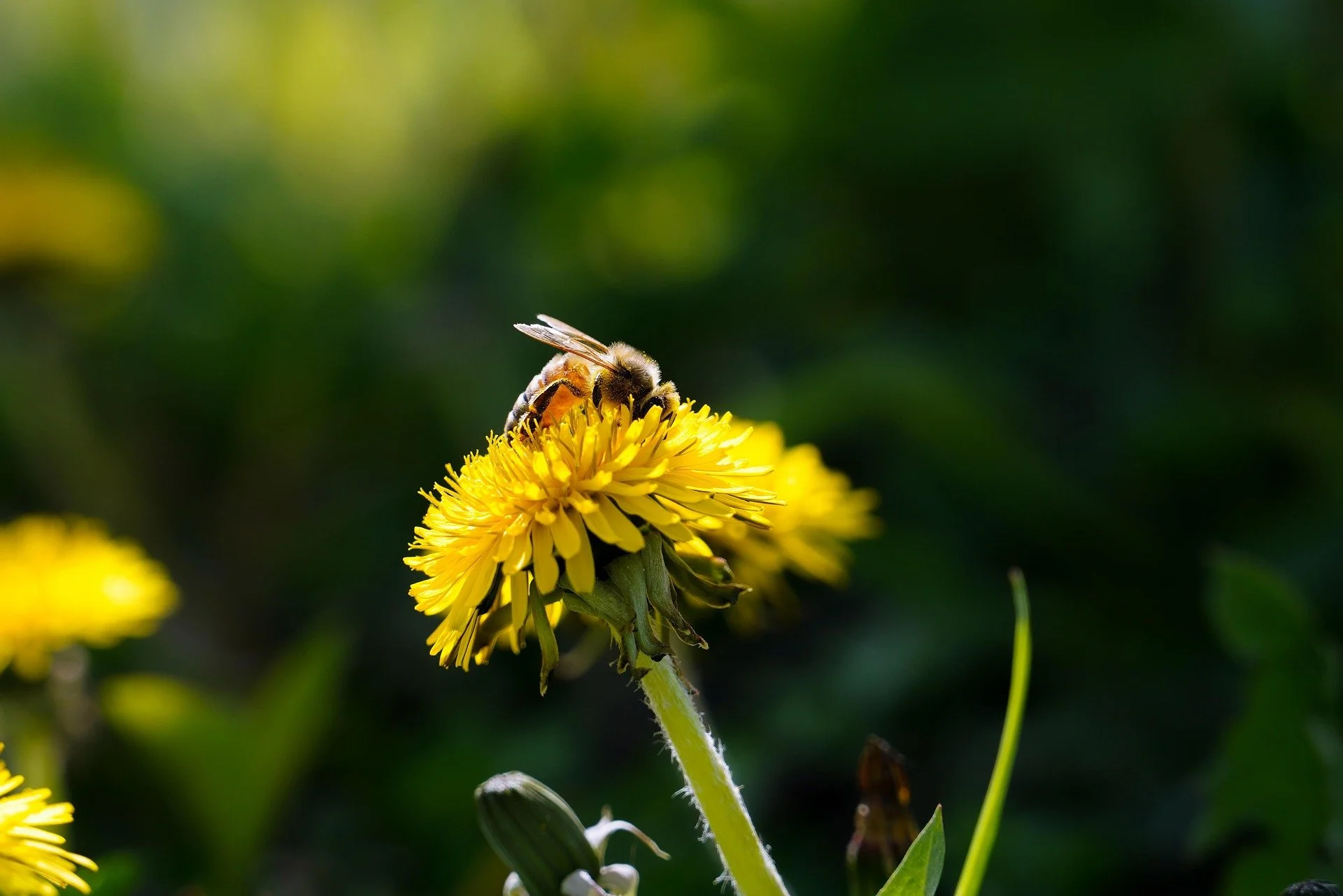
Dandelions are a crucial early nectar source for pollinators emerging from winter dormancy
They also provide a crucial bridge for local pollinators at their most vulnerable time in the season. Flowering weeks before most other flowers, dandelions are often one of the first available nectar sources for bees, hoverflies, and other beneficial insects emerging from winter dormancy. While they’re not the most nutritious flower for pollinators, they help to bridge the seasonal gap until native plants begin blooming. This presents essential survival material that ensures these insects can go on to pollinate your garden through the rest of the season.
Even its prolific seed dispersal strategy — morphing into puffballs that are carried by the wind — can be considered restorative. A single flower head can carry over 200 seeds, each one designed to find bare soil and get to work. While dandelions are often viewed as “invading” a green space, they’re actually just one of nature’s ways of filling it out. Dandelions in your lawn can show you where the turf is thin, leaving open soil that was easy to colonize.
A lawn dense with dandelions, then, is often signalling interrelated issues with soil compaction, low nutrients, and thin turf. Dandelions are often the first visible signal that these conditions have been quietly building beneath the surface.
A healthy lawn is your best defence
The most effective long-term strategy for managing dandelions isn't removal, it's competition. Dandelions are opportunists, and opportunists need opportunities. Close off the gaps, and they will have far less room to work with.

Dandelion seeds colonize bare soil; improve your grass density to prevent them from taking root
Improve your lawn density. A thick, dense stand of grass is your best natural defence against dandelions. When turf is healthy and vigorous, it shades the soil surface, crowds out weed seedlings below ground, and leaves little bare soil for dandelion seeds to land on. Overseed thin areas in early spring and fall, choose a grass mix suited to your light conditions, and mow high (around 3 inches). Taller grass shades the soil better, grows deeper roots, and is simply harder for weeds to compete with.
Fertilize for strength and resilience. Feeding your lawn regularly is just as important as seeding it. A well-nourished lawn stays strong enough to outcompete weeds, even under stress. Liquid kelp extract is my recommended fertilizer for strengthening lawns. It provides all the macronutrients grass needs, along with natural plant growth hormones that help turf recover from regular mowing and brief dry spells. A lawn that bounces back quickly from drought is one that doesn’t leave the bare patches dandelions are looking for.
Pay attention to your soil. Dandelions thrive in compacted, poorly nourished soil, and their presence in large numbers often signals that something is off below the surface. Aerating once a year, especially in heavy clay soils, improves drainage and root penetration for your grass. If your lawn gets regular care but still struggles, it’s worth investing in a soil test. It will tell you if something’s missing or off-balance like a nutrient, mineral, or something else that compost, dolomitic lime, or other organic amendments can address. When you fix the underlying condition, you will shift the competitive advantage away from the dandelion.
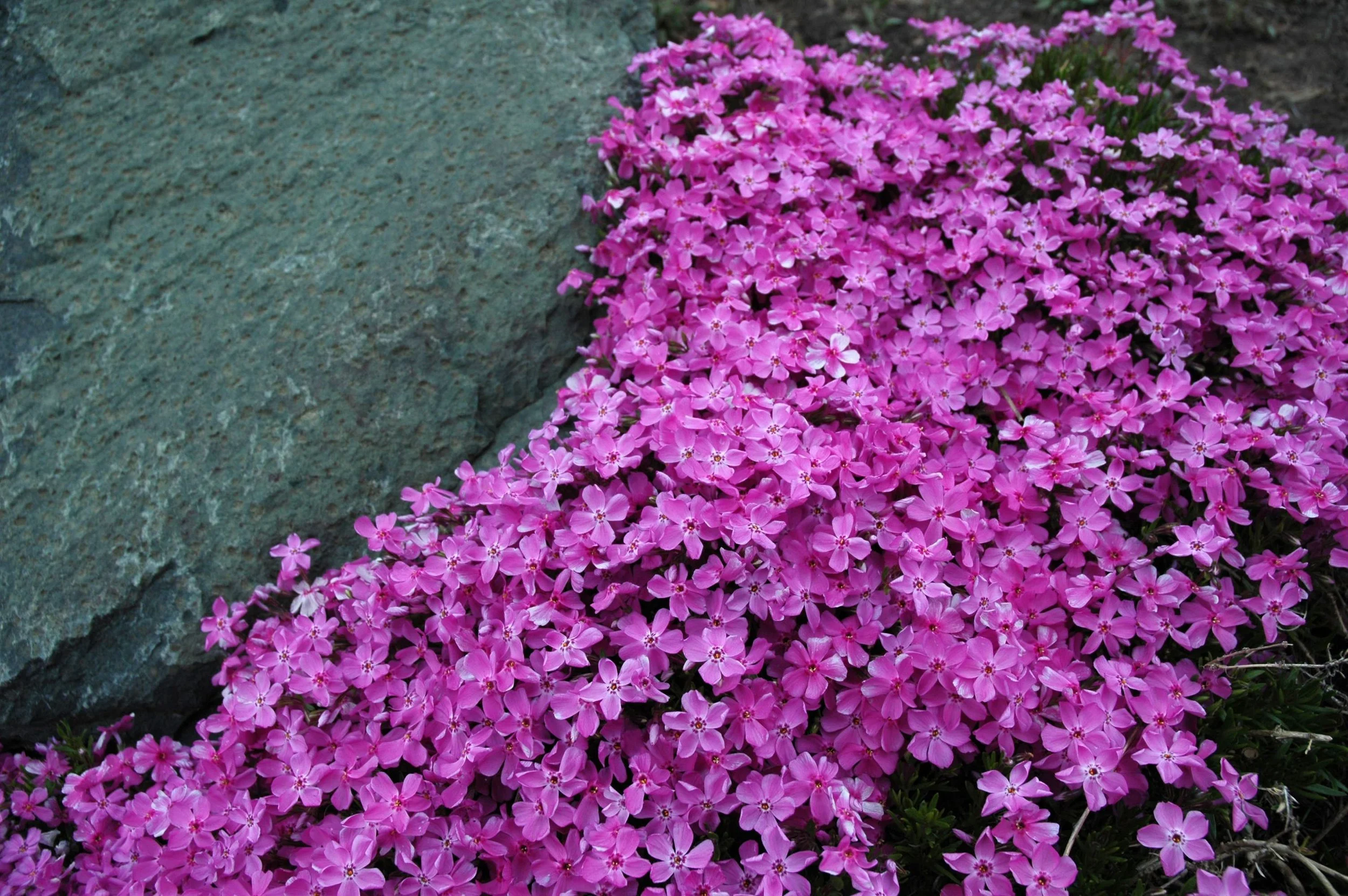
Creeping Phlox is one of many beautiful ground covers that can help fill bare soil, preventing dandelions from taking root
Let other plants do some of the work. Ground covers are an underused tool in the ecological garden. In beds, low-growing perennials like Creeping Thyme, Bugleweed, Sedum, or Creeping Phlox cover bare soil, outcompete dandelion seeds, and support pollinators at the same time. In lawns, it’s worth considering adding a little Clover to the mix — it fixes nitrogen, stays green through dry spells, and grows densely enough that it's the ground cover of choice on European sports fields and castle grounds. In vegetable beds, succession planting and cover crops like alfalfa or buckwheat keep the soil covered between harvests, breaking dandelion cycles without any additional intervention.
Tackling individual dandelions
Even in a healthy, well-tended garden, individual dandelions will still appear. Here’s how to remove them effectively when you need to, without using toxic chemicals.
Optimize your timing. The best time to act is early spring, before flowers appear and while plants are still young and their roots relatively shallow. If flowers have already opened, remove them before they turn into puffballs — each carries over 200 seeds on the wind, adding to your soil’s seedbank for years to come. A single afternoon of work can meaningfully reduce next season’s population.
Use the right tool. Hand-pulling is satisfying but only effective if you get the whole root. Dandelion taproots can run 6–18 inches deep, and a snapped root will almost certainly regrow. A weeding knife, dandelion fork, or stand-up claw weeder lets you loosen the soil and extract more of the root with less effort and less back strain. Pull after rain, when soil is moist; dry ground increases the chance of breakage.
Mulch where you can. In garden beds and under shrubs, a 2-3 inch layer of natural mulch made of shredded bark, straw, or leaf compost will suppress dandelion seeds before they can establish. For persistent problem areas, laying a sheet of cardboard or newspaper under the mulch layer (directly on the soil) smothers existing plants and blocks new ones. Note that this approach resets all plant life in the area, so is not appropriate for lawns.
Be consistent, not aggressive. Even with the best tools and timing, dandelion management rarely produces instant results, and that’s okay. Every flower removed is one less addition to the seedbank, and every root removed is one less plant to regrow. Steady, seasonal attention to pulling, overseeding, and fertilizing will reduce populations gradually and sustainably, which is a better and more realistic goal than complete eradication.
Leaving room for imperfection
All this said, not every dandelion needs to come out. In early spring, before much else is flowering, there’s an ecological argument for letting a few dandelions bloom. Pollinators that find early nectar sources in your garden are more likely to stay and work in your garden all season long, so a dandelion in April is doing ecological work that a dandelion in June is not. You don’t need to leave a lawn full of dandelions to make a difference; even a loose tolerance along the edges or corners of your property can provide that early-season bridge. As long as you cut or pull them before they go to seed, you don’t risk adding to the local seed bank.
It’s worth mentioning that more and more gardeners are choosing to relax their standards a bit, permitting the odd Clover, Violet, or mushroom as part of a more diverse, lower-maintenance yard. The picture-perfect, weed-free lawn is a relatively modern idea, and one that often comes with a high financial and environmental cost. As more people learn about the value of ecological gardening, they learn there’s something to be said about embracing a bit of “imperfection”. You might be surprised at how much adjusting your expectations can do to channel more peace into your lawn care!
Closing thoughts: Finding the balance
Managing dandelions organically isn’t so much about winning a fight against an enemy as it is understanding what your garden is telling you, responding intentionally, and accepting that a perfectly dandelion-free lawn doesn’t need to be the goal, if it’s even a realistic one.
There’s something calming about approaching a garden problem in this ecological way. When you start to see dandelions as signals rather than the enemy, your whole approach changes. You’re not fighting your lawn anymore, you’re in conversation with it.
Pull the ones that need pulling, leave a few to flower in early spring, feed your soil, and crowd out the rest with plants you actually want there. Check in each season, adjust as you go, and measure success not by how few dandelions you have but by how healthy and balanced your garden feels overall. That’s a standard much more attainable and sustainable.